Misión de Concá
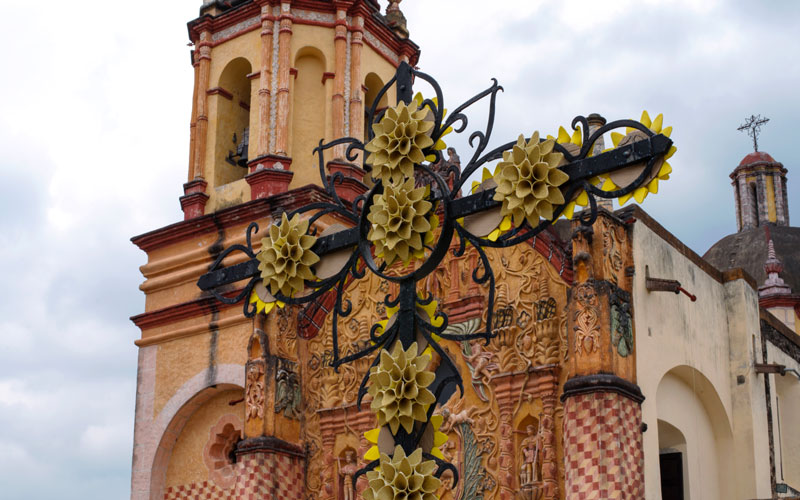
This Franciscan Mission is dedicated to San Miguel Arcángel and is distinguished by the marked indigenous features of the faces and animals that appear in its mestizo baroque façade. Its construction began in 1754 and it was the first to be completed, due to the fact that it is the smallest in the Sierra Gorda.
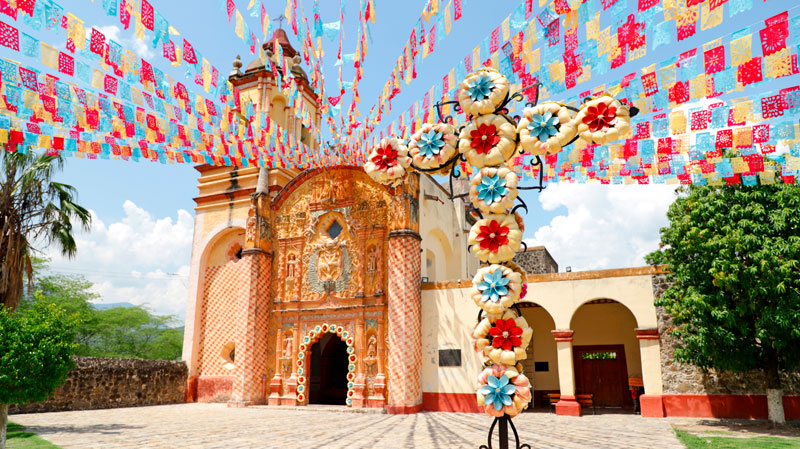
In the heart of the Sierra Gorda Queretana, the Mission de San Miguel de Concá (Mission of San Miguel Concá) stands as a testimony to the cultural and spiritual mestizaje of the 18th century. Built between 1754 and 1758 under the direction of the friars José Antonio de Murguía and Joaquín de Osorio, this Franciscan mission is the smallest of the five that make up the ensemble declared a World Heritage Site by UNESCO in 2003.Its name, “Concá”, comes from the Pame language and means “with me”, reflecting the deep connection between the missionaries and the local indigenous communities.
The façade of the church is a clear example of mestizo baroque, where Christian elements are fused with indigenous symbols, including representations of flowers, fruits and animals, such as a rabbit and a double-headed eagle, which symbolize the moon and the sun in the Pame cosmovision. At the top, a sculpture of the Archangel Michael defeating the devil crowns the structure, while the Franciscan coat of arms - the arm of Christ crossed with that of St. Francis of Assisi - is above the main entrance.
Located in the picturesque town of Concá, in the municipality of Arroyo Seco, this mission is not only a historic site, but also a place of contemplation that invites visitors to reflect on the cultural and spiritual richness of the region. Its architecture and symbolism offer a window into the past, showing how faith and indigenous traditions intertwined to shape a unique identity in the Sierra Gorda de Querétaro.








-(1)-(1).png)