San Pedro and San Pablo Teposcolula
San Pedro and San Pablo Teposcolula
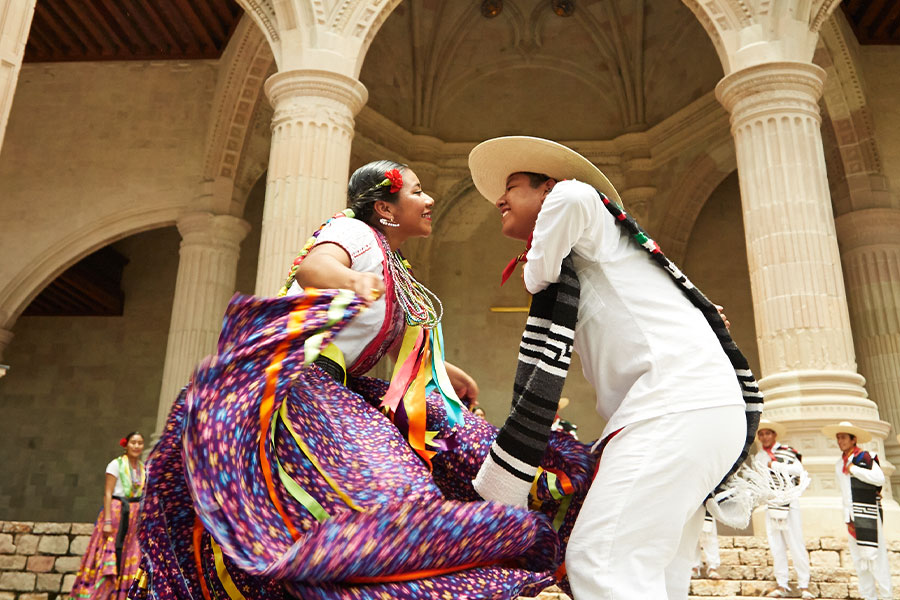
To speak of San Pedro and San Pablo Teposcolula is to speak of a region rich in tradition, architectural treasures, and cultural heritage. Its magic lies mainly in its cobblestone streets, the hospitality of its people, the legends that have emerged over time, the natural routes through the municipality’s landscapes, trails, and mountains, the region’s endemic flora, and, above all, its historic monuments, which highlight the importance of Mixtec culture and stand as enduring witnesses to the history of this community.
The original name of this Pueblo Mágico is Teposcolollan, which in Mixtec means “next to the bend of copper.” According to research, this name is associated with the form of currency used before the Spanish conquest, which consisted of small copper axes. In Nahuatl, it is called Tepuscutlan, derived from the words Tepuztli, meaning iron; Colhua, meaning twisted; and Tlan, meaning place. Translated into Spanish, the name is interpreted as “Place of Twisted Irons.”
The municipality of San Pedro and San Pablo Teposcolula has developed a tourism offering based primarily on its historical, cultural, and natural attributes, most visibly expressed through its architecture. These buildings reflect the fusion of two cultures and have become one of the community’s most important legacies.
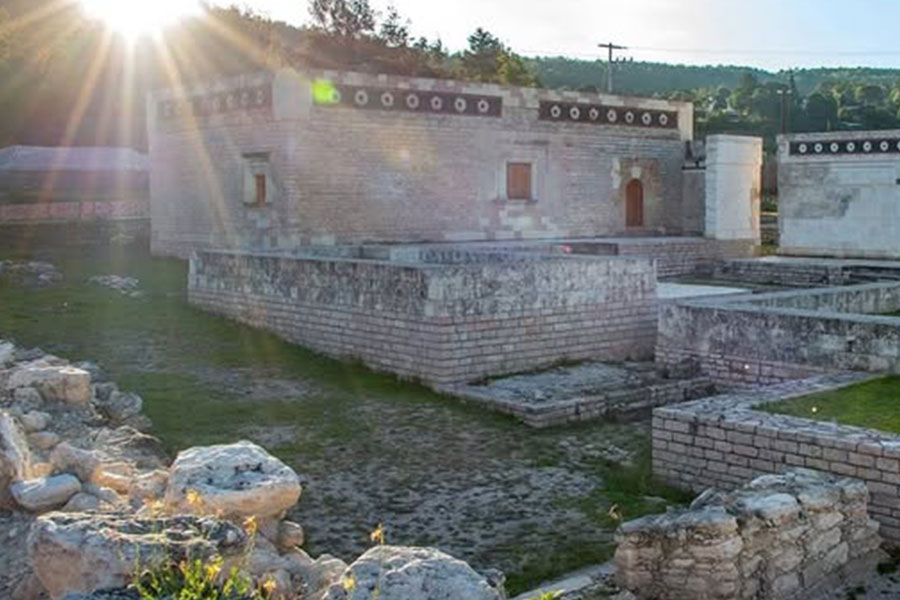
One outstanding example is the Casa de la Cacica, a palace where the last queen of the Mixtec culture lived. It also served as a storage facility for hides, feathers, diamonds, gold, silk, and other valuable goods brought from the territories that formed part of the Teposcolula chiefdom. The area reached its greatest period of prosperity during the 16th and 17th centuries, when the economic, social, and cultural wealth of the region was concentrated in this municipality.
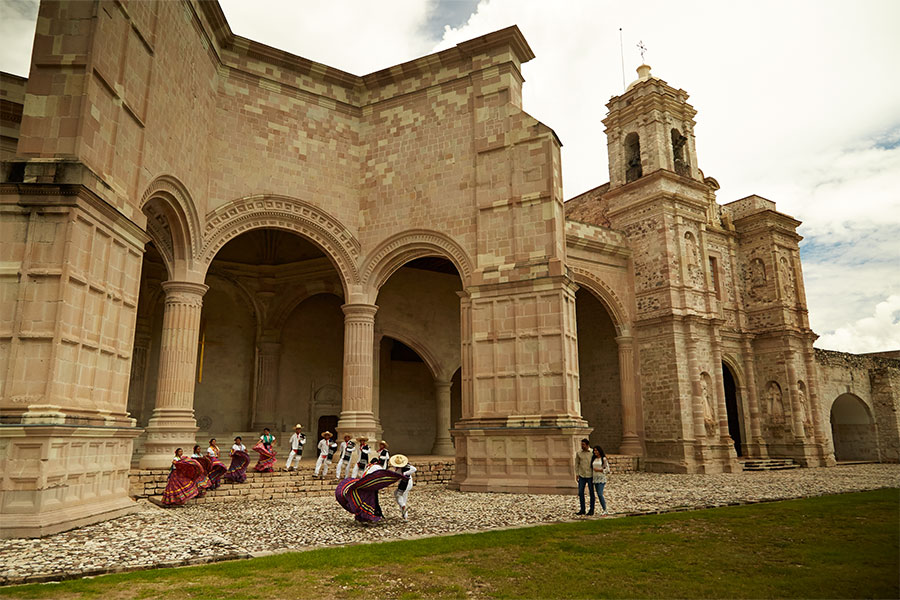
Next to this palace stands the 16th-century convent complex, consisting of the Open Chapel, the Church of San Pedro and San Pablo, and the former Dominican convent, which also houses the Chapel of Santa Gertrudis. According to John McAndrew, the magnificent Open Chapel “should be considered the most skillful construction in America.” It represents a unique architectural analogy between the Catholic church and the Indigenous teocalli. It is also recognized as the largest open chapel in Latin America.
For more than a century, the chapel was used by Dominican friars for the evangelization of Indigenous peoples. People traveled to this building from other parts of Oaxaca, as well as from the states of Puebla and Guerrero.
Immediately beside it stands the Church of San Pedro and San Pablo, considered a true sanctuary. Inside is a remarkably beautiful image of Christ known as the Señor de las Vidrieras, honored on the First Friday of Lent during what has become the municipality’s main religious celebration.
Other important heritage sites include the Hospital de Indios de la Santa Veracruz, the Odriozola and Arvea houses and small plazas, Tandaa, El Alarcón, the corn granaries, the Portal de Dolores, and the Municipal Palace.
The aqueduct extends for approximately eight kilometers, beginning in Yucundaa. Along its route, visitors can observe the remains of both the drainage structures and the aqueduct itself, which ends at La Alcantarilla. During the colonial period, Teposcolula had a complex water distribution system that culminated in a network of strategically located reservoirs supplying the general population, as well as direct water connections for prominent local families such as the Odriozola, Arvea, and Pérez families, in addition to the convent and the San Bartolo neighborhood.
Together, these buildings and structures earned Teposcolula the designation of Historic Monuments Zone, established by decree on July 22, 1986, and published in Mexico’s Diario Oficial de la Federación (Official Gazette of the Federation) on August 11 of that same year. The designation was issued through the National Institute of Anthropology and History (INAH) and signed by then-President of Mexico Miguel de la Madrid Hurtado.
Building on this extraordinary heritage, San Pedro and San Pablo Teposcolula seeks to strengthen its tourism offering as a means of contributing to a better quality of life for the local population while preserving and promoting its authentic cultural values. This vision involves the participation of all local stakeholders and encourages the development of activities, products, and services through the sustainable management of resources, respect for the environment, active community participation, and the promotion of fair trade among visitors and local communities.
The magnificent cultural heritage left by the Dominican religious order is only one part of the countless cultural expressions that can be discovered in San Pedro and San Pablo Teposcolula. Among them is Tequitqui art, a distinctive artistic tradition created by Indigenous artisans following the Spanish conquest of Mexico.