Juarez Hemicycle
The Juarez Hemicycle: history, symbolism, and grandeur in the heart of Mexico City
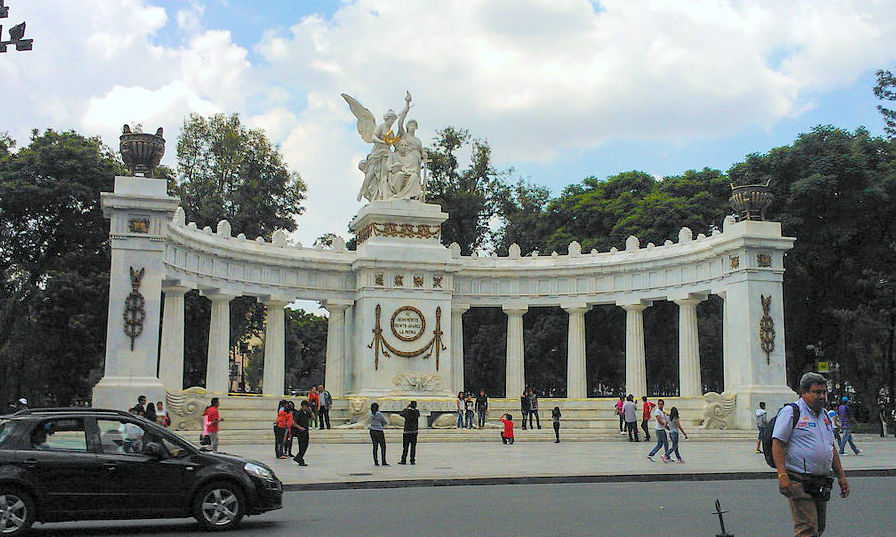
The Hemiciclo a Benito Juárez, located in Mexico City, is one of the most iconic landmarks of the Alameda Central. A historic monument, popular meeting point, and urban reference, it stands as one of the finest examples of neoclassical design in the country.
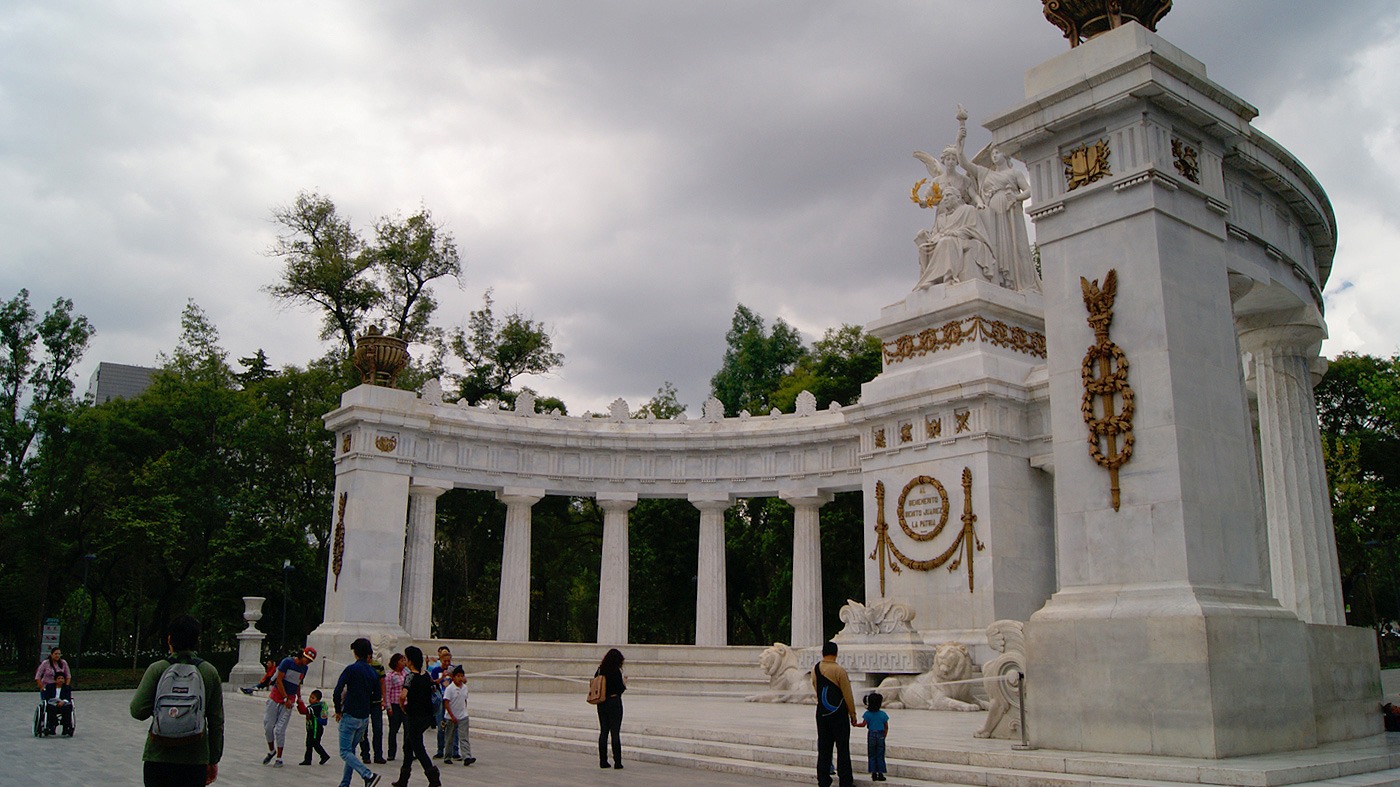
Semicircular in shape and strongly influenced by Greek architecture, the monument features 12 Doric columns supporting an entablature and matching frieze. At its center stands a sculpture of Benito Juárez, accompanied by two allegorical figures: the Nation, placing a laurel crown upon him, and the Law, holding a torch aloft. Below them, a republican eagle spreads its wings over neo-Aztec motifs, flanked by two resting lions.
On the central medallion, one can read:
“To the Meritorious Benito Juárez, from the Nation.”
Construction began in 1906 to commemorate the 100th anniversary of Juárez’s birth. The engineers were personally appointed by President Porfirio Díaz, and the sculptures were created by Italian artist Alessandro Lazzerini. Inaugurated on September 18, 1910, the Hemiciclo later served as the venue for National Lottery drawings for several decades. Prior to that, the Moorish Kiosk had occupied this same spot after returning from international exhibitions. When the Lottery moved to its own building, the monument became the backdrop for thousands of photographs—a role it continues to fulfill to this day.
The Turibús (Historic Center Route) heading east stops right in front of the monument on Avenida Juárez, near the Templo de Corpus Christi. Westbound buses stop on the north side of Alameda Central, across from the Franz Mayer Museum, on Avenida Hidalgo. Walking between both points takes about five minutes.
The Capital Bus also stops across Avenida Juárez, in front of the Memory and Tolerance Museum and the historic Templo de Corpus Christi. From there, buses return to the Zócalo. To travel westbound, passengers need only cross the Alameda and board in front of the Franz Mayer Museum, at Plaza de Santa Veracruz.








-(1)-(1).png)