Plazuela del Marqués / Plaza Menor (Zócalo)
An important stop for Turibus and Capital Bus, it's more than just that.
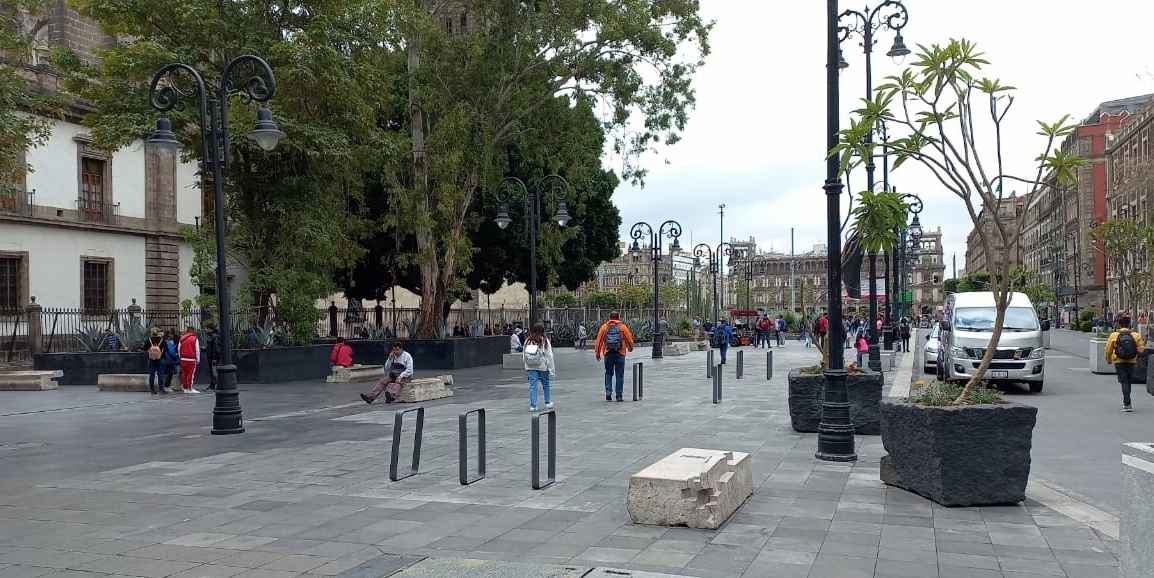
The Plazuela del Marqués is today best known as a stop for Turibus and Capital Bus lines. In fact, all three Capital Bus routes stop here, too. Turibus passengers switch here between the Historic Center Circuit and that going to the Basilica.All three Capital Bus Routes stop here, including those for the Basilica/Temples, the Centro-Polanco Route and the Center-South Circuit to Coyoacán and San Ángel.
In fact, the plaza has a history as long and important as any in Mexico City. Extending from the SHCP Gallery in the north, southward to the statue of Enrico Martinéz, the big open space has also been called the Plaza Menor. That's just to distinguish it from the Zócalo, i.e.; the Plaza Mayor.
During ancient times, the site held an important natural spring. Festivities celebrating Huitzilopochtli, the main deity of ancient Tenochtitlan, always include drinking water from that spring. The plaza only later came to be known as the Plazuela del Marqués. This is best understood in that the current Casa de Hernán Cortés, today at the corner of Tacuba and Isabel la Católica, once extended all the way south and east to the site of the present-day Monte de Piedad building. Hernán Cortés never actually lived there. But as the Marquis of the Valley of Oaxaca his name, or at least his noble title, was attached here and has never quite left.
The site is remembered today as that of a 1574 mass-execution of those convicted by the Spanish Inquisition. Some 80 condemned are said to have included pirates who'd formerly served under the slave-trader, John Hawkins. By 1607, the enormous Casa de Hernán Cortés complex was home to a swordsman named Pedro de Siria. It was he who proposed the placement of a Holy Cross here. Devotees of the marker came to be supported by the local saddle-makers guild. In 1687, they built a chapel which stood here until the area around the Cathedral was cleared in 1823. Afterwards, a flower market was erected. It remained until the mid-20th century.







-(1)-(1).png)