Ethnobotanical Garden of Oaxaca
Located in the heart of the city’s Historic Center, within the Santo Domingo cultural complex, the Ethnobotanical Garden of Oaxaca is a space dedicated to showcasing the vast plant diversity of the state and its close relationship with the history, culture, and daily life of the Oaxacan people.
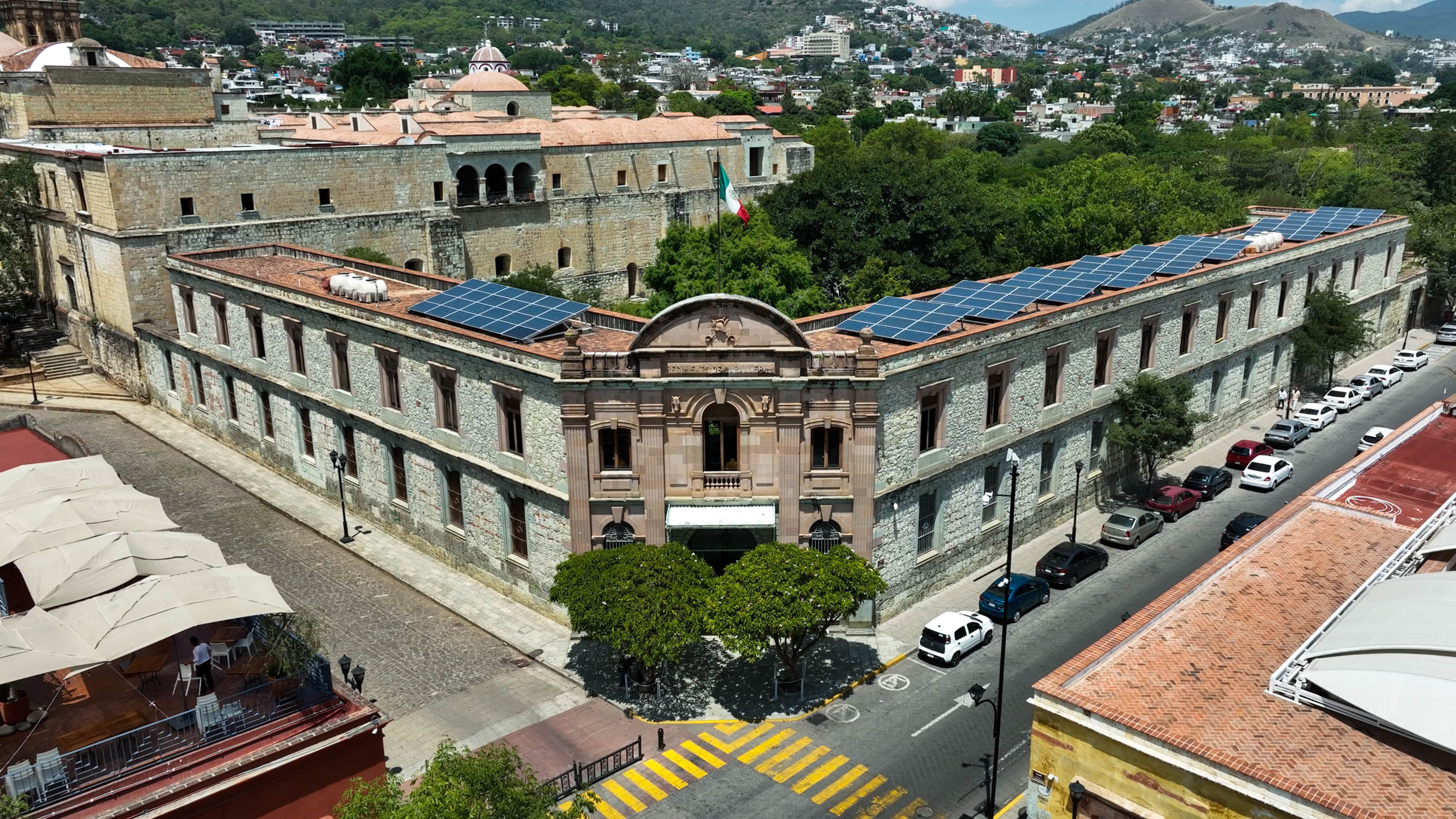
In the heart of the city’s historic center, between Reforma Street and Constitución Street, lies the marvelous Ethnobotanical Garden, part of the Santo Domingo Cultural Center, a former convent built in the 16th and 17th centuries for Dominican friars. This emblematic place was born thanks to a proposal in 1993, initiated by Maestro Francisco Toledo and the civil association PRO-OAX (Patronato para la Defensa y Conservación del Patrimonio Cultural y Natural de Oaxaca, A.C.), with the purpose of rescuing the old building and creating around it a botanical garden that would represent and preserve the plant diversity of the entire state. Over time, this space served multiple functions; one of the most important was its use as a Mexican army barracks for more than 120 years. It was not until 1994, when the federal government ordered the relocation of the garrison, that the state government proposed transforming the site into a luxury hotel, convention center, and parking lot. However, the project promoted by Francisco Toledo and a collective of artists and citizens defended the idea of creating a garden, a proposal that ultimately prevailed. Thanks to this, the Ethnobotanical Garden officially opened its doors in 1998.
Since then, this extraordinary space has been dedicated to showcasing the state’s plant wealth to visitors from all over the world, highlighting that Oaxaca is one of the regions with the greatest biodiversity in the country. All the plants that make it up were brought from different corners of Oaxaca, each telling a different story. Here coexist species from humid forests, tropical zones, temperate mountains, and cold regions, creating a unique natural mosaic. The tour allows visitors to discover medicinal and edible plants, many of them essential in traditional cuisine, and a special “rescue” area where agaves and cacti saved from construction projects in other parts of the state grow. Among the ceremonial species are mesquite and copal, whose resin is used as incense and whose wood gives life to alebrijes; not to mention agaves, the basis of the emblematic Oaxacan mezcal. There is also a space dedicated to traditional crops such as hierba de conejo, corn, beans, chepil (a key ingredient in the tamal of the same name), jícama, amaranth, tomato, chia, and many more.
Currently, the Ethnobotanical Garden opens its doors from Tuesday to Sunday, from ten in the morning to six in the evening. It is a public space where anyone can enjoy an unforgettable experience through guided tours along its paved paths, which extend over five hectares. These paths are surrounded by trees, flowers, and herbs that make the garden a charming place to stroll and learn about the native plant species of the state of Oaxaca.
In addition, the Ethnobotanical Garden shares space with the Oaxaca Public Newspaper Library “Néstor Sánchez Hernández,” a place dedicated to safeguarding the historical memory of the state. There, images, documents, and newspapers more than a century old are preserved and open to public consultation. Upon entering, an arch welcomes visitors to the main courtyard of the Garden, while to the right is a cultural corner with a reading room and two large halls: one dedicated to the process of selection, restoration, and conservation of the collection; and another housing the newspaper materials, which also serves as a venue for workshops, conferences, and presentations.
The Newspaper Library was founded in October 1972 by journalist Néstor Sánchez Hernández, who was its first director and whose name today distinguishes the institution. Today it safeguards publications ranging from the late 19th century to the present day, becoming a treasure for those who wish to learn about the history of Oaxaca through its pages.








-(1)-(1).png)




_gmxdot_jpg)

