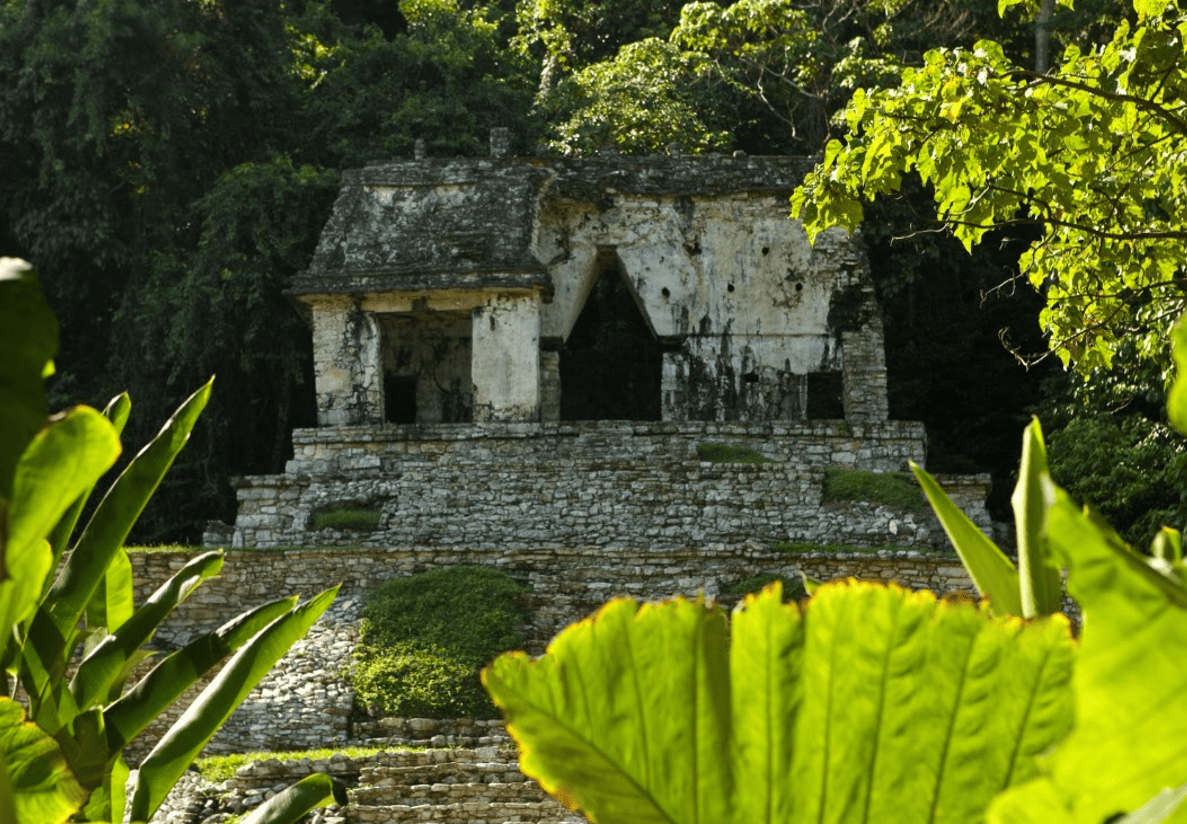
Palenque Archaeological Site
A stone jewel nestled in the jungle, where the art, power, and history of the Maya world endure through time.
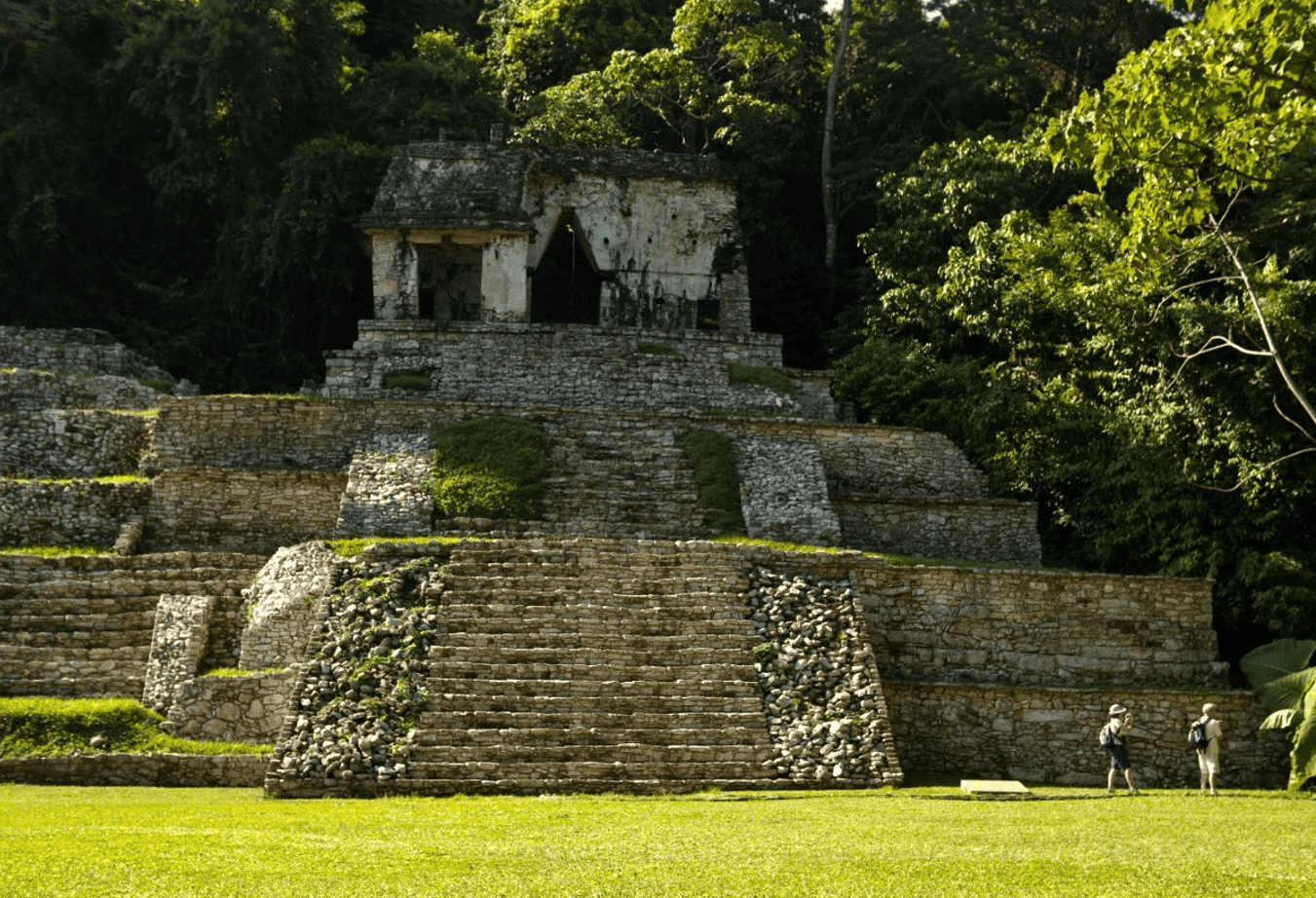
The remains of Palenque are located in the northern part of the Mexican state of Chiapas, just ten kilometers west of the town of Santo Domingo de Palenque, at the foothills of the Chiapas highlands. This monumental settlement has fascinated travelers and explorers since the late 18th century.
Its exquisite stone reliefs, abundant hieroglyphic inscriptions, and the arrangement of its temples and plazas in harmony with the surrounding jungle create an unparalleled natural and cultural setting. These characteristics have made Palenque one of the most extensively studied archaeological sites in Mexico.
Palenque’s importance lies both in its architectural development and in the extensive trade network that connected it not only with other cities in the Maya region, but also with distant areas of Mesoamerica. The site comprises more than 200 architectural structures of varying sizes and complexity, distributed across 2.5 square kilometers and remarkably adapted to the region’s mountainous terrain.
Its origins probably date back to around 100 BC, when it began as a small agricultural village established on the last foothills of the Sierra Madre de Chiapas, where the mountains transition into the coastal plain of the Gulf of Mexico. In this area of tropical rainforest and abundant water resources, Palenque developed throughout the Formative Period (2500 BC–AD 300). During the Early Classic Period (AD 300–600), the city began its rise, reaching its greatest splendor during the Late Classic Period (AD 600–900), when it became the dominant center of a vast region encompassing much of present-day Chiapas and Tabasco.
Along with Tikal and Calakmul, Palenque was one of the most powerful cities in the Maya world during the Classic Period. It was home to one of the most notable dynasties, which included the renowned ruler Pakal. His tomb—discovered in 1952 by archaeologist Alberto Ruz L’Huillier—is considered one of the most important discoveries in Mesoamerican archaeology.
Like other Classic Maya cities, Palenque was connected to various centers through trade networks, marriage alliances, and political ties among ruling elites. The system of city-states, identified by what is known as the Emblem Glyph, formed the territorial and political foundation of this civilization, in which trade, alliances, and warfare contributed to constant interaction and movement.
Palenque’s hieroglyphic inscriptions not only identify the site but also provide detailed records of political relationships, marriages, and conflicts among cities. These inscriptions are essential to understanding Maya history and represent one of the earliest writing traditions in Mesoamerica, based on a logosyllabic writing system and complex calendars: a cyclical calendar, shared with other Mesoamerican cultures, and a linear calendar known as the Long Count.
Site chronology: AD 500–900
Main chronological period: Classic Period (AD 400–900).